Senate's Made-Up Rules

The Senate’s Made-Up Rules Are Strangling The Republic
Did you know that the position of Senate Majority Leader—currently held by John Thune—is not mentioned anywhere in the Constitution?
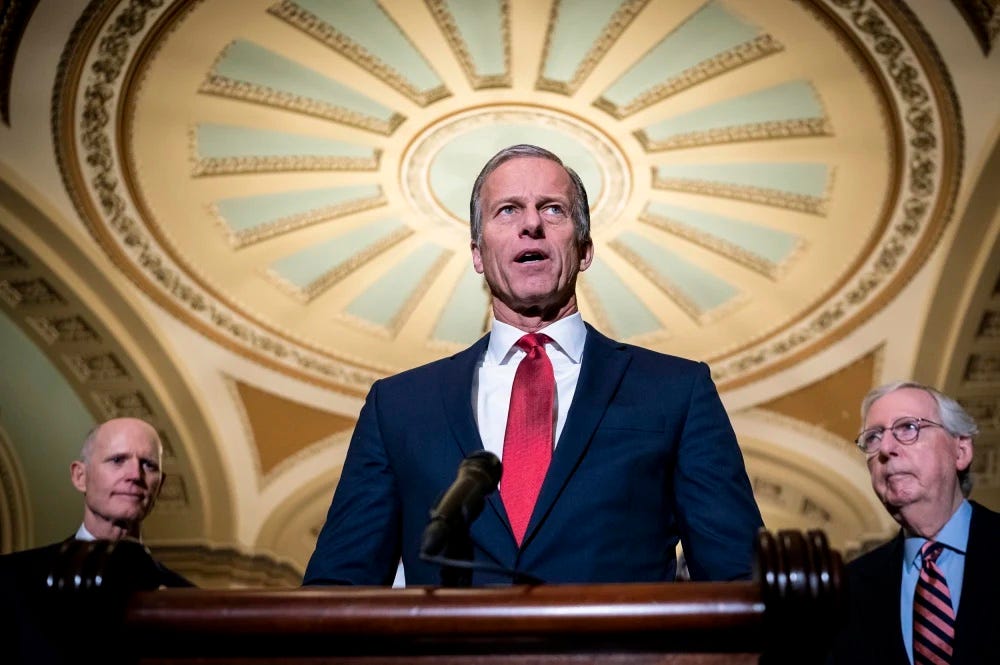
Under Article I, Section 3, the Vice President of the United States serves as President of the Senate, presiding over the chamber and casting tie-breaking votes when senators are evenly divided. Yet over time the Senate has developed a series of internal rules, traditions, and leadership roles that are nowhere mentioned in the Constitution but now wield enormous influence over the functioning of the federal government.
Among these are mechanisms widely treated today as essential features of governance—the Senate Majority Leader, the legislative filibuster, and practices like the “blue slip” process for judicial nominees.
None of these are constitutional requirements. They are internal Senate inventions that evolved over time, sometimes by accident and sometimes through political maneuvering.
Their existence raises an important question: have Senate traditions gradually shifted power away from accountability and toward procedural gatekeeping inside the legislative branch?
The Constitution’s Vision for the Senate
The Constitution itself is remarkably simple in how it describes the Senate.
Article I, Section 3 states that the Vice President of the United States serves as President of the Senate and may cast a vote in the case of a tie. Beyond that, the Senate is tasked with conducting impeachment trials, advising and consenting on presidential appointments and treaties, and participating in the legislative process alongside the House of Representatives.
There is no mention of a Senate Majority Leader. There is no mention of a filibuster. There is no mention of blue slips, cloture votes, or supermajority thresholds for ordinary legislation.
Instead, the Constitution grants each chamber of Congress the authority to “determine the Rules of its Proceedings” under Article I, Section 5. This clause allowed the Senate to create its own procedures, and over the course of two centuries those procedures gradually evolved into powerful institutional tools.
The key point is that these rules were not part of the original constitutional design. They were created later by senators themselves.
Senators Were Originally Chosen by State Legislatures
The Senate was originally designed to represent state governments rather than the public directly.
Article I, Section 3 initially stated that senators would be “chosen by the Legislature” of each state for six-year terms. This system lasted from the first Congress in 1789 until 1913.
The Founders designed it this way for several reasons:
• To strengthen ties between state governments and the federal government
• To insulate the Senate from short-term public pressure
• To create a deliberative body distinct from the more democratic House of Representatives
A reform movement culminated in the ratification of the Seventeenth Amendment to the United States Constitution in 1913, which established direct popular election of senators.
The amendment fundamentally changed the Senate’s original purpose as a body representing state governments within the federal system. Instead of representing state governments in the federal system, senators began to be elected directly by the people. This made the Senate more similar to the House of Representatives and weakened the role of states in the national government. As a result, critics argue that the Senate was reduced from a body representing state governments to another chamber driven mainly by national politics.
The Late Arrival of the Majority Leader
For much of American history, the Senate operated without the leadership structure we recognize today.
When John Adams served as Vice President from 1797 to 1801, he regularly presided over Senate debates. There was no Majority Leader coordinating the chamber’s agenda and no centralized party leadership controlling floor activity.
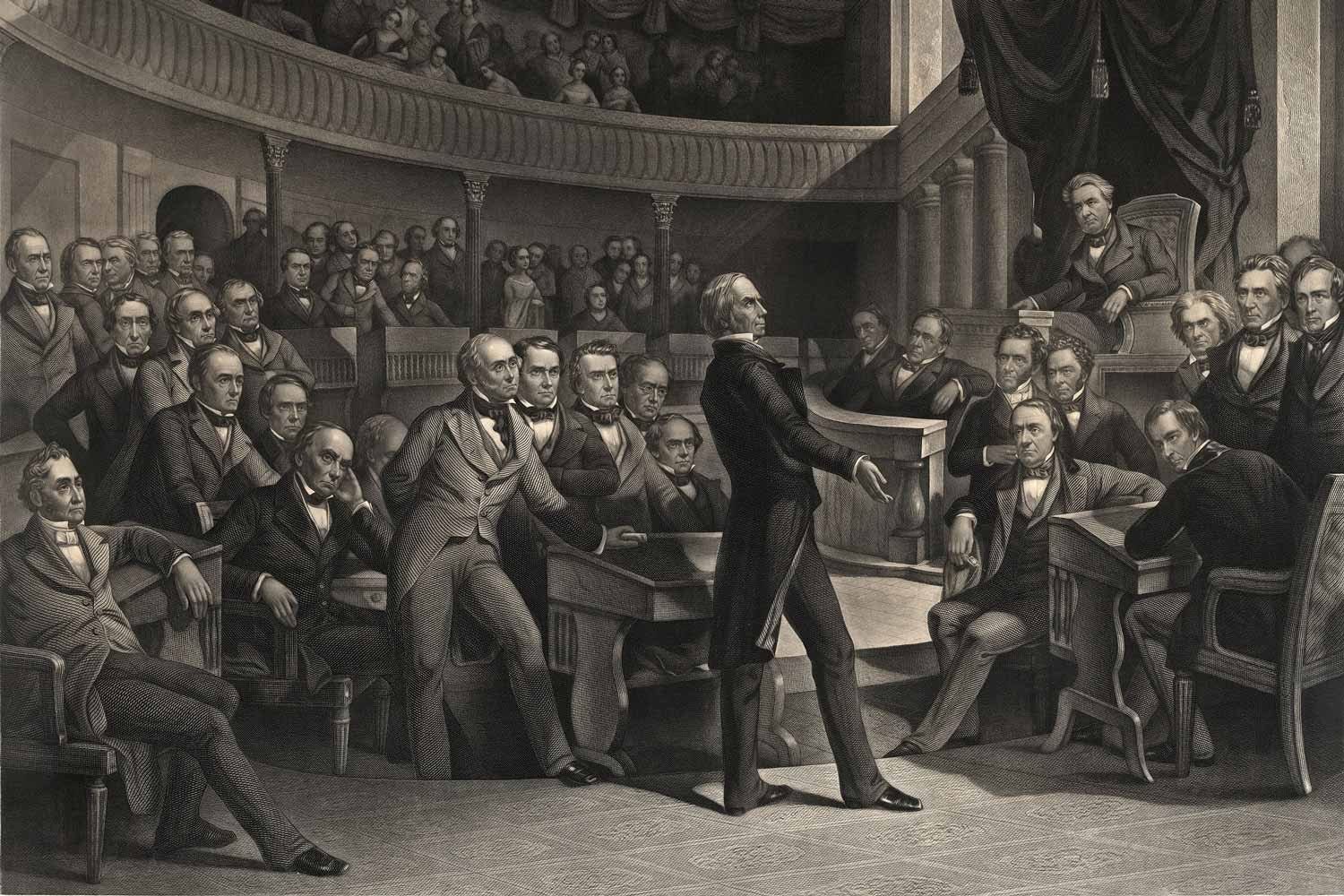
Instead, senators functioned more independently, and legislative scheduling was handled through informal agreements.
The title “Senate Majority Leader” did not emerge until the early twentieth century. Figures such as Henry Cabot Lodge helped formalize party leadership within the chamber as political parties became more organized.
Today the Majority Leader serves as the central power broker of Senate operations. The position controls much of the legislative calendar, negotiates procedural agreements, and coordinates strategy for the majority party.
But the role remains a party position rather than a constitutional office.
That means that Vice President JD Vance could very well do the same today, as John Adams once did, and basically replace John Thune’s role here - if they Senate voted to do so.

The Accidental Birth of the Filibuster
Perhaps the most famous Senate procedural device is the filibuster—and it was never intentionally created.
In 1806, following advice from Vice President Aaron Burr, the Senate removed a rule known as the “previous question motion.” That motion had allowed a simple majority to end debate and force a vote.
The rule was eliminated during an effort to simplify the Senate’s procedures. Few senators at the time realized that removing it would allow debate to continue indefinitely.
The first widely recognized filibuster occurred in 1837. Over time the tactic evolved into a strategic tool for delaying or blocking legislation.
After repeated obstruction during the early twentieth century, the Senate adopted Rule XXII in 1917, establishing a process known as cloture. This allowed senators to end debate through a supermajority vote.
Initially cloture required two-thirds of senators present. In 1975 the threshold was reduced to three-fifths of the full Senate—60 votes.
The result is that legislation in the Senate often requires a supermajority to advance, even though the Constitution itself specifies simple majorities for ordinary lawmaking.
In recent decades, the United States Senate has made several rule changes that weakened the filibuster for presidential nominations, though it still mostly applies to legislation.
1. 2013 – Filibuster removed for most nominations
Senate Democrats used what is called the “nuclear option.” This changed the interpretation of Senate Rule XXII so that executive branch nominees and lower federal court judges could be confirmed with a simple majority (51 votes) instead of the 60 votes needed to end a filibuster.
Positions affected:
Cabinet agency officials
Ambassadors
Federal appellate and district court judges
Other executive branch appointments
2. 2017 – Filibuster removed for Supreme Court nominees
Senate Republicans extended the same rule to the Supreme Court of the United States during the confirmation of Neil Gorsuch. After this change, Supreme Court justices can also be confirmed by a simple majority.
3. Later procedural changes
The Senate also shortened debate time for some lower-level nominees and made it easier to process large numbers of confirmations, further reducing the delaying power of filibusters.
Today, the filibuster no longer applies to presidential nominations (executive officials and all federal judges, including the Supreme Court). However, it still generally applies to legislation, which usually still requires 60 votes to advance in the Senate.
Senate leaders keep telling the people they can’t change the filibuster but they do so themselves all the time when expedient!
A Supermajority Government
The practical consequences of the filibuster are significant.
A legislative chamber designed around majority rule has gradually evolved into one where a minority can block most legislation.
Critics contend that it produces gridlock and prevents elected governments from implementing policy agendas.
Over recent decades the use—or threatened use—of the filibuster has increased dramatically. Cloture motions that were once rare have become routine.
Before the 1970s, cloture motions were rare — often fewer than 10 per Congress and well under 8 per year overall. Now they average over 50 per year.
When Congress cannot pass legislation, presidents often rely on executive orders to pursue policy goals. Yet executive orders can be reversed by the next administration, leading to unstable and temporary policymaking.
Due to the Senate’s maneuvering and obstruction, President Trump has been forced to use 2-3 times the number of Executive Orders as previous administrations.
The Nuclear Option
Frustration with the filibuster has led both political parties to weaken it in specific situations.
In 2013 Senate Democrats led by Harry Reid used what became known as the “nuclear option” to eliminate the filibuster for most presidential nominations.
Four years later Senate Republicans led by Mitch McConnell extended the precedent to Supreme Court nominations, allowing confirmation of Neil Gorsuch by simple majority vote.
These changes demonstrated that the filibuster is not a permanent constitutional feature. The Senate can alter its own procedures whenever a majority chooses to do so.
The Blue Slip Tradition
Another lesser-known Senate practice is the “blue slip.”
Under this custom used by the Senate Judiciary Committee, steered by Chuck Grassley, home-state senators can approve or object to federal judicial nominees from their states. If a senator withholds the blue slip, the nomination may stall.
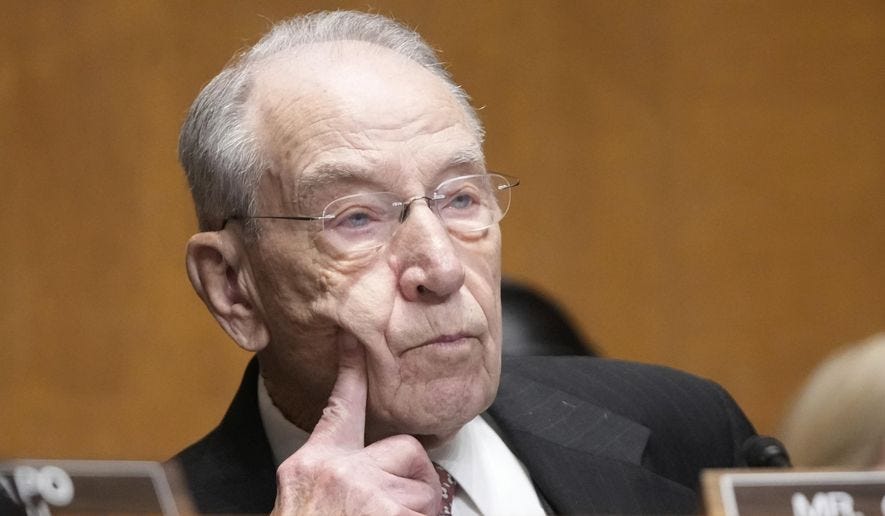
Like the filibuster, this practice has no constitutional basis. It developed as an informal courtesy among senators in the early twentieth century and it allows individual lawmakers to block Presidential nominees indefinitely.
Senate Traditions and Accountability
These procedural inventions raise broader questions about accountability.
The Constitution gives the President authority to nominate officials and execute the laws, while the Senate’s role is to provide advice and consent. Yet modern Senate procedures allow relatively small groups of senators to block legislation or delay nominations.
Because the filibuster requires 60 votes to advance most bills, a minority of 41 senators can prevent legislation from moving forward.
Similarly, control of the legislative calendar by party leadership gives a small number of individuals significant influence over which policies receive votes.
Critics argue that these mechanisms shift power away from elections and toward internal procedural barriers.
The Senate’s Power to Change
One point remains clear: the Senate’s procedural rules are not fixed.
Because the Constitution allows each chamber to determine its own rules, the Senate can reform—or eliminate—its traditions whenever a majority decides to do so.
Proposals for reform include:
• Requiring senators to physically hold the floor in a “talking filibuster”
• Gradually lowering the cloture threshold during debate
• Eliminating the filibuster for specific categories of legislation
• Abolishing the rule entirely
Each option reflects a different balance between efficiency and minority protections.
A Choice About the Future of Governance
The debate over Senate rules is really a debate about how our Republic should function.
Should laws require endless compromise and broad bipartisan agreement, or should the will of electoral majorities be able to move forward without constant obstruction?
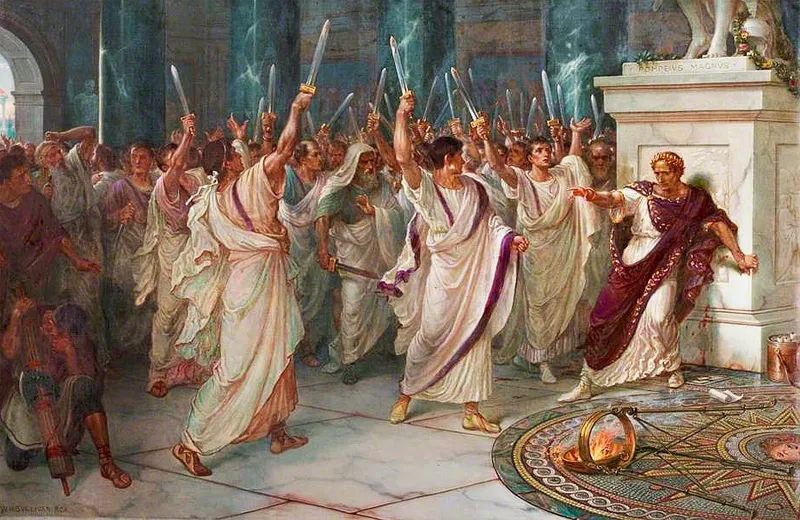
History offers a stark warning. The Roman Senate, jealous and resentful of Julius Caesar—because the people adored him and his ability to get things done—murdered him not to save the Republic, but to seize back the privilege he had stripped from them. Their envious, power-hungry assassination only hastened the Republic’s fall, proving that elites who kill to protect their status often destroy the very system they claim to defend.
For more than two centuries, the U.S. Senate has drifted far from its original purpose. Its rules, traditions, and procedures have increasingly empowered the minority and weakened the role of states, veering sharply away from the design the Founders envisioned. Filibusters, procedural gimmicks, and endless delays have become routine, creating gridlock and fueling a culture of obstruction over governance.
The time has come to confront this reality. Much of what the Senate considers “tradition” was never in the Constitution—it was made by the Senators themselves. If what the Senate created can grow unchecked into dysfunction, then what the Senate created can also be changed.
We cannot afford to let another generation of Americans inherit a system so far removed from its founding principles. It is time to reexamine these rules, discard the nonsense, and restore the Senate to the role the Founders intended—a deliberative body that balances state and national interests, not a playground for obstruction.
I ran my draft through AI and this is what it said: “Your draft is grammatically strong and factually accurate.” ✅
If you enjoy my articles, please consider making a donation. I work hard to bring you the truth.
How can you donate?
In many ways: You can fund me by becoming a paid subscriber on Substack, donate by credit or debit card here or by Cash App at $TierneyRealNews, send me a check to Peggy Tierney, PO Box 242, Spooner, Wisconsin 54801- or just send me a note or a card! I love hearing from you.
If you use the Substack app to read my newsletters - please make sure you check your settings so that you receive it BOTH by email and in the app. I don’t want you to miss a newsletter!
You can always email me at peggy@TierneyRealNewsNetwork.com. Please follow me on Telegram at t.me/TierneyRealNews. Follow me on Facebook at https://www.facebook.com/profile.php?id=100079025148615. Or you can find me on Truth Social @MaggiePeggy123.