Shut It Down

WHAT IS THE REAL IMPACT OF A FEDERAL SHUT DOWN? HERE ARE SOME FACTS THAT THE FAKE NEWS REFUSES TO COVER.
There are 2.3 million Federal employees in the United States - not counting uniformed military and Postal Service staff.
The average federal employee today earns roughly $90,000 in annual base salary in 2025, after a 4.5% raise in January 2025, and an average of $31,300 per year in benefits - for a total per employee of $121,300. Nice, huh?
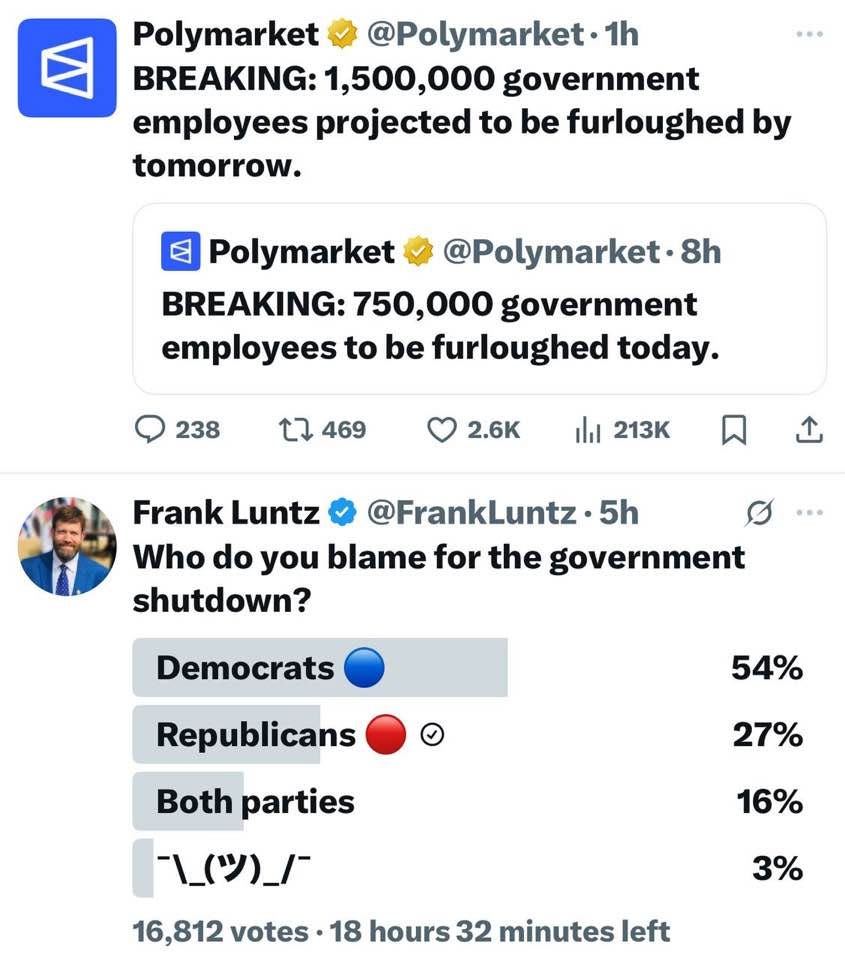
During a government shutdown, about 750,000 federal employees are typically considered “non-essential” and are furloughed, meaning they are sent home without pay.
The rest—about 1.54 million—are deemed “essential” and must continue working, though often without immediate pay.
For essential workers (about 1.54 million), the total salary and benefits cost is approximately $187 billion per year.
For non-essential workers (about 750,000), the total salary and benefits cost is approximately $91 billion per year.
In other words - non-essential Federal employees cost the American taxpayer $91 billion per year in salary and benefits - so the Trump administration is looking at ways to CUT THOSE JOBS and allow the private sector to pick them up where it makes sense.
During a federal government shutdown, only “essential” services—those necessary for the safety of human life and protection of property—continue to operate, while most “non-essential” functions and agencies suspend their activities.
These are the Services That Continue During a Shutdown
Military and National Security: Active-duty military members, essential civilian defense staff, and national security-related functions like intelligence gathering and border protection continue operating, though pay may be delayed.
Law Enforcement and Public Safety: FBI, DEA, TSA, federal corrections officers, air traffic control, and Secret Service continue their core work.
Health and Safety Initiatives: Emergency medical care at VA hospitals, CDC outbreak response, and some food safety inspections remain operational, though with reduced support staff.
Social Security and Benefits Payments: Social Security, SSI, Medicare, Medicaid, and veterans’ benefits keep processing and paying out, though local offices may offer only limited services.
Disaster Response: FEMA and related emergency services continue disaster relief and immediate response efforts, albeit with potential payment delays to states.
Postal Service: USPS is self-funded and not affected by shutdowns, so normal mail processing and delivery continue.
Critical Infrastructure: Some operations related to power grid management, FEMA emergency management, and airspace oversight continue.
These are the Non-Essential Services That Shut Down or Are Suspended
Federal Grant Programs: New grants and payments (e.g., Head Start, research initiatives, education funding) are paused.
National Museums: Most visitor centers, museums, and national landmarks are closed.
U.S. National Parks are open but with significantly limited services and staff. Most outdoor areas remain open, while indoor facilities and specific programs are closed. The Department of the Interior has directed that parks should remain “as accessible as possible.”
Non-Essential Agency Activities: Many regulatory, research, and administrative functions across agencies (EPA, HUD, Labor, Education, Commerce, and others) are halted.
Federal Courts: Some court operations slow down or pause, particularly civil and bankruptcy case processing, after a brief initial grace period.
Licensing and Permits: Processing of gun permits, passports, and other federal licenses is typically delayed or stopped.
These Services are Subjected to Temporary Disruptions and Delays
Student Aid and Loans: Processing FAFSA forms, Pell Grants, and federal student loan applications may be delayed, though repayment obligations persist.
City and State Programs: Localities relying on federal grants for infrastructure or emergency support may see delays in reimbursements or support if the shutdown is extended.
Research and Clinical Trials: NIH clinical trials, new research funding, and federally sponsored scientific studies generally pause during the shutdown.
In summary, essential services related to safety, national defense, emergency response, and benefit payments persist, while most routine administrative, regulatory, and public-facing federal activities halt during a shutdown.
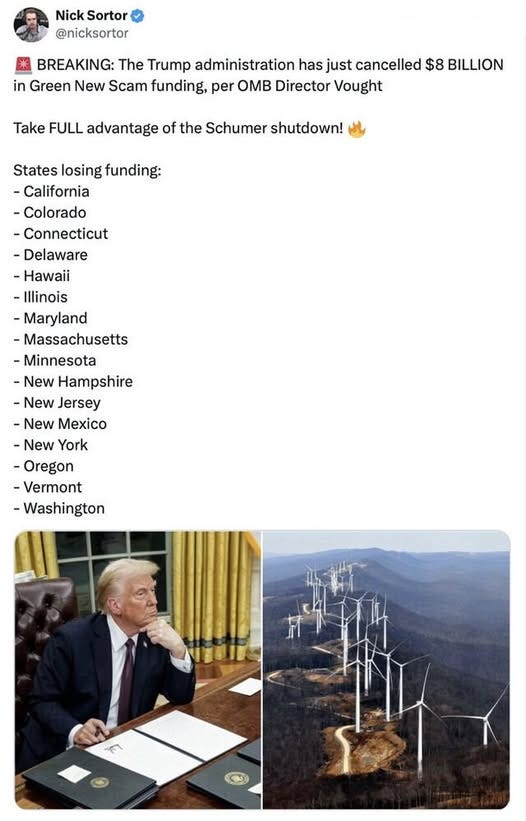
PRESIDENT TRUMP: “I had a meeting today with Russ Vought, he of PROJECT 2025 Fame, to determine which of the many Democrat Agencies, most of which are a political SCAM, he recommends to be cut, and whether or not those cuts will be temporary or permanent.
I can’t believe the Radical Left Democrats gave me this unprecedented opportunity. They are not stupid people, so maybe this is their way of wanting to, quietly and quickly, MAKE AMERICA GREAT AGAIN! President DJT
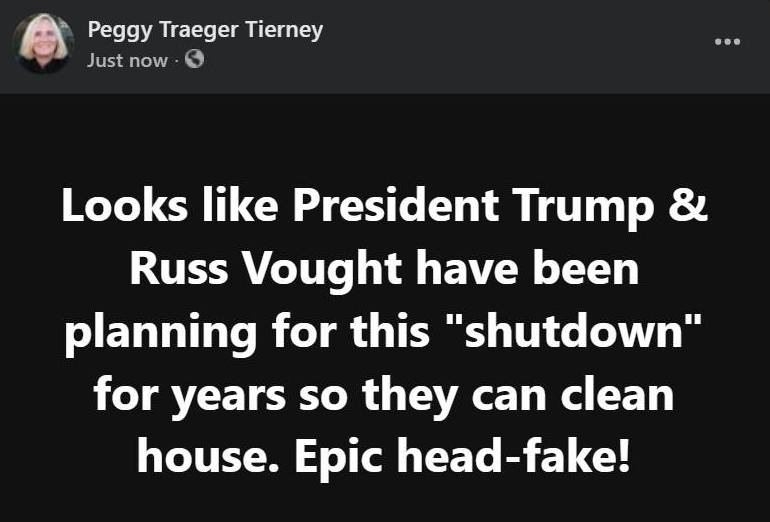
Remember when Trump pretended not to know what Project 2025 really meant? He lied. It was a head-fake!
Obama’s old spokesperson was on MSNBC and he looked white as a sheet - he just figured out they’ve been played. Cracks me up.
I’M FINE WITH SHUTTING DOWN ALMOST ALL THE NON-ESSENTIAL SERVICES THAT ARE FUNDED BY THE US TAXPAYER. HOW ABOUT YOU?
My work is free and supported by your generous donations. Thank you to all who have donated in the past. I truly appreciate your generosity!
If you like my work, you can fund me by becoming a paid subscriber on Substack, donate by credit card here or you can send me a check to Peggy Tierney, PO Box 242, Spooner, Wisconsin 54801- or just send me a note or a card! I love hearing from you.
You can find and search over 1000 of my free newsletters at my website here.