
I used to think it was just the US and Communist China. Two heavyweights staring each other down across the Pacific.
When you strip away the talking heads and look at the hard metrics, a different reality snaps into focus. There are actually three true blocs deciding the shape of the world: the United States, Communist China, and the European Union—a collective of socialist-leaning regulatory machines that act like a single superpower whenever it suits them. Off to the side sit Russia and India, two massive wildcard players forcing a new calculation at every turn.
Once you put the numbers side by side, you immediately understand why so many mainstream commentators, corporate institutions, and online influencers default to the European Union’s framing or soft-pedal Communist China. The European Union (EU) offers a comforting vocabulary of “rules,” “values,” and managed decline. It flatters an entire class of credentialed professionals who prefer process over outcomes.
Communist China (CCP) offers massive scale, deep pockets, and the quiet promise that American primacy is fading anyway—so the smart play is to hedge, compromise, and accommodate.
Both of these narratives let people sound incredibly sophisticated while ignoring the exact same set of undeniable facts: the United States still holds the largest nominal economy, the highest individual productivity, and the only military capable of projecting devastating power at a distance. The other two blocs know this. They are actively trying to close those gaps on their own terms.
The deeper conflict isn’t just about territory; it is about what the world should actually look like.
The European Union champions a top-down secular globalism—a single, borderless order managed by One World Order standards, climate mandates, speech regulations, and permanent migration pressures that subordinate national sovereignty to the European Union.
Communist China wants an atheist authoritarian hierarchy with Communist China at the absolute center, using economic dependency, total surveillance, and raw military pressure to force deference to its red lines.
Against both of these visions stands the American model: a world of FREE sovereign nation-states that control their own borders, secure their own energy, rebuild their own industrial bases, and trade only when it benefits them.
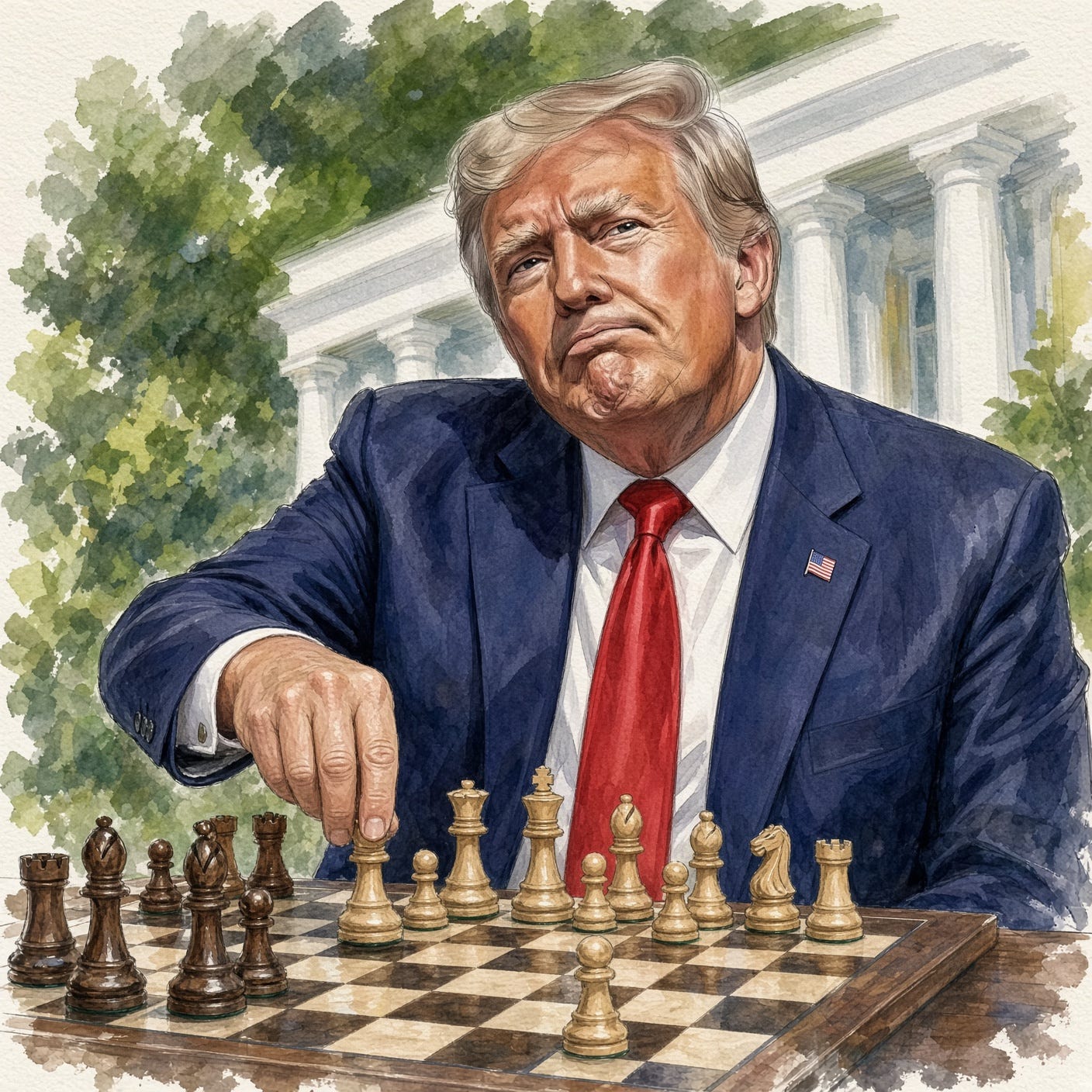
That model is entirely incompatible with the European Union’s regulatory overreach and Communist China’s demand for submission. It is exactly why both blocs treat American independent strength as the core problem to be solved rather than a permanent fact to be lived with. This is the jagged, multi-front board Donald Trump has to play on. The metrics don’t lie, and neither do the incentives.
The United States, at least the conservative majority that prioritizes its own interests, wants something simpler: sovereign nation-states. Countries that control their own borders, energy, industry, and defense, that trade and ally when it benefits them, and that do not hand final authority to a supranational regulator or a foreign party-state. It is also why the other two treat American strength as the enemy.
Trump has to navigate all of it because the EU and China are not neutral competitors. One chips away through trade imbalances, technology transfer, and industrial policy aimed at displacing American production. The other uses regulation, migration pressure, and constant demands that American taxpayers and troops underwrite European security while Brussels writes the rules for everyone else.
Neither wants a United States that sets its own terms on energy, borders, or defense. Trump has always said that the EU only has one purpose - to defeat the US. Russia supplies the disruption that forces the EU to rearm and pulls Chinese attention. India is the rising counterweight that shares an interest in checking the CCP without wanting to become anyone’s junior partner.
The numbers make the incentives obvious. That’s the board Trump is playing on.
Scoreboard
Population and land. China still has the bodies: about 1.41 billion. The EU is around 452 million. We’re roughly 349 million. On land, the US and China are almost twins—about 9.15 million and 9.39 million square kilometers. The EU is less than half that. China can throw manpower at problems. We can’t match that raw count, and neither can Europe. That’s why demographics matter more than most people admit.
Money. Nominal GDP still puts us first: roughly $28.5–32 trillion depending on the latest IMF read. EU combined is about $22.8 trillion. China around $21.5 trillion. We win on size. We crush on productivity. Our GDP per person is about $95,000 international dollars—nearly double the EU average and triple China’s. That gap is technology, capital, energy, and a system that still rewards work and invention more than the others. China has scale. The EU has rules. We have the productive engine. For now.
Military. This is where the differences get sharp. Our budget is in the neighborhood of $950 billion to over $1 trillion. China’s official number is around $277 billion; real estimates (SIPRI and others) put it higher, maybe $336 billion once you count the off-books stuff. The EU’s 27 members together are heading toward roughly €454 billion in 2026—still well behind us and fragmented across national commands.
Troop and internal-security numbers tell a different story. China has the biggest active military (over 2 million) plus millions of police and paramilitary internal-security forces. Their total footprint can reach 7 million or more when you include the People’s Armed Police and local militias.
The EU combines about 1.4 million active military with a large police and gendarmerie presence (Guardia Civil, Carabinieri, Gendarmerie).
The US has roughly 1.3 million active, solid reserves, and about 750,000 sworn civilian police—no massive domestic paramilitary force like China’s. We project power outward. China uses a lot of its manpower to control its own people.
Nuclear: We still have about 5,042 warheads and a real triad. China is growing fast to around 620 and building silos. France (the only real nuclear state in the EU) has about 370.
Carriers: We have 11 nuclear supercarriers. China has 3 conventional ones focused on the Western Pacific. The EU has two relevant decks (France’s Charles de Gaulle and Italy’s Cavour).
Stealth fighters: We lead with hundreds of F-35s and the F-22s. China is pumping out J-20s and starting the J-35. Europe is buying our F-35s because it doesn’t build its own fifth-generation jet.
Demographics are the quiet killer. All three are below replacement fertility. China’s has collapsed hardest. The EU has more deaths than births and only grows because of net migration (around 2 million a year). We also rely on immigration to stay positive. China doesn’t have that option. Its working-age population already peaked. By 2050 the projections show massive losses. That’s a structural weakness for Beijing and a long-term edge for us—if we control our own borders and decide who comes.
The Wildcards. Russia is the disruptor. Huge nuclear arsenal, energy exports, and a willingness to fight. It is not a peer economy, but it forces Europe to rearm and pulls Chinese attention and resources. Moscow and Beijing are aligned against American influence in places like BRICS, yet they also compete. Trump has to keep Russia from becoming a full junior partner to China while avoiding open-ended wars that drain us.
Many overestimate Russia’s position on the world stage. While Russia looks massive on a map, it has far less real power than the US, the EU, or China because land size does not equal actual strength. Most of Russia’s giant territory is frozen wasteland, meaning it has very little farmable land compared to Europe. Its population of 143 million is tiny next to China’s 1.4 billion, and its economy is only about one-tenth the size of the US or EU. Because Russia relies mostly on selling oil and gas rather than building high-tech industries, its workers produce less than half the economic value per hour as American or European workers. Finally, even though Russia has a lot of nuclear weapons, its annual military spending is heavily outmatched by China, the EU, and especially the United States.
India is the swing player. Bigger population than China soon, better demographics, nuclear weapons, growing economy, and a natural counterweight to Beijing in the Indo-Pacific. It is not an ally in the NATO sense—non-aligned by tradition, buys Russian energy and weapons—but it has every reason to work with us against Chinese expansion. India wants technology and investment without becoming a vassal. That is navigable if we stay clear-eyed.
Why Trump Navigates Differently
The EU and China are not sitting still. China runs a mercantilist system that transfers technology, subsidizes industry, and builds military capacity aimed at pushing the US out of the Western Pacific. The EU writes rules that reach into American companies while expecting American taxpayers and troops to underwrite European security. Both want a multipolar world in which American leverage shrinks. Neither wants a strong, independent United States that sets its own terms on trade, energy, and defense.
Trump’s approach has been to stop writing blank checks, demand more from allies, confront Chinese unfair practices, and keep options open with India while managing Russia. Alliances are tools, not religions. NATO is useful against Russia but has free-rider problems. European defense spending is rising only because Russia invaded Ukraine and because Washington started saying no. China responds to strength and costs, not lectures. India responds to shared interests against Beijing, not lectures about values.
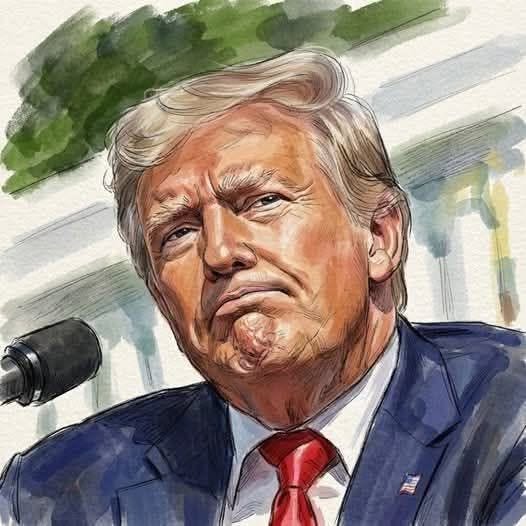
Removing the Needs
None of the scoreboard changes the main problem our competitors face: they need specific things from the world that only exist in limited amounts—energy, minerals, trade chokepoints, and nearby territory to place their footprints or keep us out.
That is the logic behind the moves. Greenland sits on critical rare earths, Arctic shipping routes, and a location that matters for missile defense. Venezuela holds the world’s largest proven oil reserves and sits inside our neighborhood, where Chinese and Russian money have already tried to plant flags. Iran’s nuclear program and regional reach give it leverage over energy routes and force us to keep carriers and sanctions tied down. Cuba is ninety miles from Florida and offers a potential listening post or supply node for anyone wanting to complicate American operations close to home.
In every case the target is not the country itself. It is the specific need that country fills for a rival. Remove the option or make it too expensive, and the other side’s choices shrink.
Trump’s offhand comments about Canada or Venezuela as the “51st state” are this calculation said out loud. He is not drafting annexation papers. He is pointing out the alternative: if the United States does not secure influence, resources, and alignment in its own neighborhood, China and the European Union will step in. China already runs ports, telecom networks, and resource deals across Latin America. The EU writes trade and regulatory standards that pull governments toward Brussels-style rules. Both treat the Western Hemisphere as open ground. Treating it as contested space is the minimum required to keep the economic and military edge from being undercut next door.
Brazil belongs at the center of the same picture. It is the largest economy and population in South America, a major exporter of food, minerals, and energy, and a country that has balanced between Washington, Beijing, and others for years. Chinese investment and commodity demand already give Beijing leverage. European trade and regulatory ties pull in the other direction. Leaving that balance untouched means accepting that the biggest state in the hemisphere can be courted, financed, or regulated by the same two blocs trying to close the gaps with the United States.
Control over our own hemisphere does not mean owning every capital. It means making Chinese port deals, telecom networks, and resource lock-ins—and European regulatory export—face higher costs and clearer American alternatives. Push the rival footholds out, or at least make them expensive and reversible.
The core incentives have not changed. The European Union still prefers a regulated world in which national sovereignty is managed from above. Communist China still prefers a hierarchy in which others accommodate its red lines.
Sovereign nation-states that control their own borders, energy, and industry do not fit either plan. In order for America to survive as the world’s leading superpower, we have to see our own strengths and weaknesses clearly and then move against what the other two blocs actually want. The EU wants a regulated global order that subordinates national borders and industry to its rules. The CCP wants a hierarchy with China at the center and everyone else adjusting to its red lines. Both treat American strength as the obstacle. If they are lacking an element they need to conquer us - they will form alliances with those who do.
If we do not counter-move on the board—securing the resources, the hemisphere, the industrial base, and the alliances that matter—we lose the edge the metrics still give us. Simple as that.
If you value my work, please consider making a donation. My work is free for all but supported by many generous readers like you.
How can you donate? You can fund me by credit or debit card here or send a check to Peggy Tierney, PO Box 242, Spooner, Wisconsin, 54801. You can also support me by becoming a paid subscriber on Substack or by Cash App at $TierneysRealNews or by Venmo to @TierneysRealNews. Make sure to select the profile marked ‘Business’ so it goes to the right place! Thank you so much.
I accept no annoying ads to get in the way of truth. My only source of funding comes from readers like Sparky. I don’t need much to live on but it helps pay the bills.

90% of those who started with me years ago are still with me. Thank you.
I've written extensively about the Red-Green axis - Islamo-Communist. It is led by the CCP - not the other way around. That's where people get confused. I just cleared it all up. https://tierneyrealnewsnetwork.substack.com/p/red-green-axis?utm_source=publication-search
The current Democrat Party favors the EU model. With its trajectory, it will soon favor the Communist China model. Either way, America suffers. Then the world will suffer. Don't vote Democrat.